About Me

My photo
An itinerant observer and thinker about life in general, sharing some moments of wandering and wonderment.

Sunday, 22 July 2012

SUMMERTIME

Yes, it seems that summer as we usually think of it, clear skies, hot sunny days, is here! Hooray, better late than never. To re-arrange the words of a famous song as regards our local farmers ... "Summertime and the living ain't easy."  Amongst all the sounds, the rumble of tractors busily cutting and turning the many acres of hayfields, ensuring winter feed for the herds of cattle and flocks of sheep. Making the most of a short window of opportunity, our farmers were too busy even to go to the pub for the usual Sunday get together. Everywhere, the scent of freshly mown hayfields filled the breeze blown air.
Another sound caught my attention today, that of young fledgling Meadow Pipits. They seemed to be everywhere, their calls less strident than their parents and it was amusing to see some of them learning how to balance on fences and use their newly grown wings.
Unlike the more wary adults, this adventurous youngster
<<< was not camera shy and I watched it closely for almost quarter of an hour. Unfortunately these are the best photographs I could get with my small digital camera and using the zoom facility, but this young bird kept me enthralled as it seemed to be learning the tricks of how to balance and fly in the increasing breeze. It flitted from fence wire to post, as if practising it's landings, some of which were a bit wobbly, but when successful, it burst into immature song as if chuffed with it's progress. It has a lot yet to learn to survive but at least, unlike my  sadly rejected nest of eggs, this youngster has a chance of survival. Now onto bigger beasts ...
Heading back home I saw these local cattle enjoying the sunshine, including this big Limousin  bull who ... previously has been camera shy ... not today. I guess he's got used to my various attempts to catch him on camera, usually he runs far away when I try to photograph him, not today. He even seemed curious about me ... 
He is one big hunk of beef and a wonderful example of the breed. Bought just last year, he has already been busy siring offspring, but now they are all growing in size, he can just be content with grazing peacefully in the late summer sunshine. All around him mothers, daughters and sons were all peacefully grazing. It made for a lovely rural mountain scene and ... a change from sheep related things (though this farmer and his son run both ovine & bovine.)
As he peacefully grazes, a gentle mother nuzzles one of his sired calves. She was licking and nudging this calf, which seemed to be quite content just to lay down in this long awaited summer sun. Meanwhile other calves, as curious as most youngsters are, were gathering together to explore the hedgerow and looked bemused as this strange looking, two legged creature, stood behind the fence, with camera at the ready.
So there you go, it's not just the sheep that catch my eye, but they are a lot easier to take photographs of. They seem less camera shy than cattle, take these two ... oblivious to me ... 
they were licking the salt from a council road gritting salt box! Hopefully before winter sets in and we need it, this will all be replaced. But we have Autumn to enjoy before that!

Saturday, 21 July 2012

POND LIFE

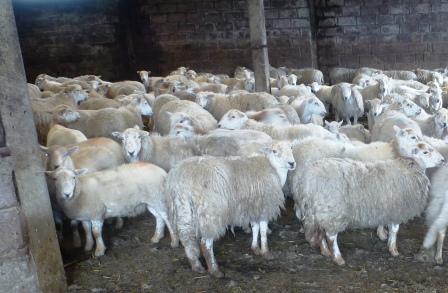
Now, you may be wondering what <<< this photo has to do with ponds. Be patient! This morning, about 200 sheep were  sheared and this photo was taken at the end of the hours of hard graft. Two shearers, two willing fleece handlers and one busy farmer got the last of the out-bye sheep de-fleeced. I picked up the dog and drove one of the helpers home.
On the way back I stopped to give the mad mutt a chance of some exercise and found Cwmcelyn Pond, a place I've been meaning to visit for ages and what a lovely surprise it was. Originally a feeder pond for the local collieries, it has been transformed into an area of recreational activity and what a hidden treasure it was to find this seemingly tranquil lake.
Serene and peaceful now, it is hard to imagine what it was like in it's industrial heyday. So much has changed in the Welsh Valleys now. Gone are the grit and the grime of the coal pit and industrial smog. Now instead of dark faced miners heading for work underground, fishermen patiently wait for a bite. The air is clean and clear, the atmosphere one of recreation replacing the grim, hard, dark working times of a nation.
This was one of the empty stations we walked past today, but many of the others were occupied with fisherman. Some old , some young, some in-between, all talking their chance at a catch. Talking to some of them. it seems that the pond is well stocked with trout, pike and bream. They also have well attended fishing competitions here, so all is not as tranquil as it at first appears to be.

A bridge, spans towards one end of the pond and today the reflections were clear in the undisturbed water, that was until the frenzied feeding of the local ducks. A mother and kids were feeding bread to the assorted species  of water fowl of which mallard were the most numerous, but sadly only one mallard chick was to be seen. I'm guessing the voracious, greedy pike had the rest. Pike in a pond as limited as this can easily decimate the numbers of other birds and have even been known to eat rats, water voles and other supposedly land dwelling creatures! They are a voracious species and best caught on a fisherman's line!


Meanwhile on the opposite bank, two "old timers" were having a chat as they dangled their lines in the water. They were obviously just out for the day to share reminiscent  tales of times past. They reminded me of that now famous film "The Odd Couple"
I was joined on our slow walk by an elderly chap, whose wife died on the morning of their 47th Wedding Anniversary. How sad is that? He then proceeded to tell me that he himself was waiting for a serious operation and was wondering who would look after his lovely little Jack Russell bitch when he goes in. It was a sad, but enlightening meeting.
I may struggle sometimes with my health, but his story, sort of  put my own into perspective. The sad thing was that he told me, he rarely gets the chance to open up to others that he regularly meets on his walks with the dog, and we spent a long time just talking, but ... what cheered me up was the fact, that, he is learning from local school children about the migration of seasonally local birds and ... the inhabitants of the pond. He has found a new interest in local life and was very informative about how this area used to look in its industrial heyday.  Hopefully, like me he will inhale the wonderful scent of one of my favourite, delicately scented summer flowers, that now replaces the darkness of coal mining ...  it now grows freely and abundantly and is very aptly named ... 
Meadowsweet!

Friday, 20 July 2012

LOOKING ON THE BRIGHT SIDE

This was the scene across one of the potential hayfields yesterday evening ...
yes ... at last blue skies above well ripened grassland and ... a forecast of dry days ahead.
This morning, this gravestone caught my eye as rather apt for the time of year and all the months of unseasonal, wetness in different forms, from damp drizzle to storms. It's as if the hand reaching out from the stony clouds, points down,  saying "Let them make hay!"
And so the process has begun in earnest, tractors busy on all the farms cutting the long grasses, to later be turned and air dried  before eventually getting baled for storage and hopefully a good source of winter fodder for sheep and cattle alike will be saved. But, there is still shearing left to do because the wet weather has elongated the de-fleecing season. The recent weather changes have seen an increase in "fly-strike" that's when an adult blowfly lays her eggs on a sheep, given the right conditions these can turn into maggots, then adults in a mere ten days. They prefer a moist, warm environment which is what we have had recently, and an unshorn fleece is ideal. This is why shearing is so important at this time of year. Only this morning, even lambs were getting sheared due to an increase in fly strike. For our farmers it is a case of balancing priorities, which can change from day to day and means that important decisions have to be made, summer health and winter feed seem to juxtaposition for priority. It is most definitely not an easy life to lead and these hard working folk deserve better treatment by supermarket buyers and consumers. Our U.K  dairy farmers are constantly in the news at the moment for that very reason, they are being treated badly over something that is a daily part of the consumers purchases, milk! Sadly, it seems that much as many want to buy "Fair-trade" tea and coffee, they do not consider U.K milk or meat to count amongst those items in their shopping that require fair treatment of the producers, it is outrageous! No wonder that we are losing many of our farmers across U.K almost daily. Living close to our farming community as I do I can bear witness to the very long and ... unsociable hours that our farmers work. I may at times make light of the world around me, but though these folk may be tough, they constantly live on the edge of day to day decision making and it is a fine balance to get things right. It is far from the well known 9-5  job. Overtime isn't double paid and the hours are long and physically demanding. So why do they do it you may ask? Simply because they are dedicated and care deeply about the quality of their stock. No farmer wants to see his herds or arable land go to rot.
I am fed up of hearing the oft quoted phrase "You never see a poor farmer." If that was really the case, why do we see so many fall by the wayside every day? Or like most folk in this country, do they just not realise the daily losses of our guardians of the supposedly much loved British Countryside (created mostly by our Island wide farming community). But, as the title says in true Monty Pythonesque fashion, "Always look on the bright side of life." maybe one day, the contribution our hard working farmers put in will ... once again be appreciated and be seen as vital to our survival in the troubled times ahead. I hope so.

Thursday, 19 July 2012

PIPIT UPDATE.

I'm afraid folks as regards the Meadow Pipit nest it has not been good news.

<<< a Meadow Pipit not far from the nest where I first found the three eggs. As I watched it, with it's three eggs over several days, hoping to record as I did last year a diary of a Skylarks nest. This was not to be a happy ending. Sheep grazing very close to the nest, seemed to have scared the birds away and day after day there were only three eggs in the well concealed nest. Without seeing the adult bird, it's hard to know if if the nest belongs to Skylark or Pipit, as the eggs are very much alike.
It is only when they hatch that it is easier to identify the occupants. Sadly these did not hatch. It seemed to be a mixture of constantly lousy wet weather, a lot of grazing sheep (who almost stepped on the nest) and left their tell tale wool. Plus on one day, the eggs were covered in rain drops, a bad sign that the eggs had been left unattended.


A few days later, I took the chance to show you how small is the size of the eggs, by placing a British five pence and one pence coin in the nest. They are tiny and very difficult to see normally. Over the days that followed, I checked the eggs, but nothing had changed, until the other day, when all that was left was the remains of the shells. Something, most probably a foraging fox, judging by the fresh spraint nearby, had had a very small meal. But the good news is that there are Skylarks & Meadow Pipits aplenty up on the moor land and I feel sure that despite the weather, many of them have been much more successful in rearing this years chicks. I hope so, they bring the mountain brilliantly alive with their song.

Wednesday, 18 July 2012

SHEARING UNDER COVER.

This is how yesterday started, with an echoingly, empty barn with a few cattle in it, not for long however as the cows were moved out, all except for one little lad. I will come to him later. The mountain road was empty and quiet except for swallows and swifts darting in and out of the barn feeding their chicks in the high rafters. Eyes looking skywards, hoping for the rain to hold off long enough to dry about 250 ewes in the mountain breeze before herding them up from the in-bye fields, to the barn for de-fleecing. They were gathered from the lower farm and brought up the road in a loudly bleating stream.
They were then neatly herded into the barn to stay dry until the shearer arrived at midday and then the really hard work could begin on yet another session of shearing. 
The noise in the barn of several hundred bleating ewes and their lambs seemed to reverberate off the walls and bounce back, creating a cacophony  of sound that is quite awesome. And this lot having come off the freedom of the mountain grazing, just want to get back out on the commons as soon as possible, but they've several hours wait ahead of them.
Baled wool from the day before, was stacked ready to be taken away for the Wool Marketing board, who provide the "sheets" (empty wool sacks), which once shearing begins, fill quickly as willing hands take the freshly shorn fleece away from the shearer's board and lay it shorn side down, outside up on the rolling boards in the barn.
The fleece is then folded as neatly as possible, bring both sides over and in and then starting from the nearest end, rolled into a neat bundle, before adding it into the bag alongside the others, until each bag is packed as full as possible, when it is sewn up with a very large iron needle and a long lenghth of white nylon cord, it's quite a task to get the cord tight enough to keep the sack secure for moving into storage.
Or, as in the stack above, they are held together with 8 inch long, squared wooden pins.
The sheared ewes, were less vociferous and seemed fascinated by these strange, large white things, that smelled like themselves but were silent and didn't move about. They kept sniffing at them. Meanwhile in the barn. was another silent observer of all the action.
This four day old calf, left alone in the barn because he quite simply does not want to go out with his mam and the other cattle.
He's perfectly healthy but just a bit of a loner and seemed perfectly content watching the goings on in the ovine, not bovine hours of the day. He even moved nearer to the action as if to have a better viewpoint of the activity in the barn.
The shearer was on his own today. He reckons to shear an average of 40 sheep per hour. With 250 to get through he had his work cut out. Meanwhile the farmer and his two helpers, kept up a steady flow of sheep through the various gates and pens, rolled fleeces and bagged them, raked up all the loose wool from the shearers board to give him a clean working space and generally kept the whole process running smoothly.
Outside the barn, the fleece-free and released were foraging for any greenery they could and ... if tall enough,  to reach over the fence, like these two ... the rewards were good.
But no self respecting, free roaming sheep likes to be penned in and they wanted freedom.
The noise level was getting louder as the hours went by, then finally just before the mile journey up the mountain road to freedom ... yep ... the weather closed in and a heavy mist cloaked the mountain in a damp shroud with very little visibility. I went up to the gate to witness their arrival.
They had spent the weekend getting inoculated, drenched and dosed, spent hours in the barn and it's vicinity, and now in the dank, darkening evening, all that now came between them and the freedom of thousands of acres of common ground,
<<<  was this single gate. I could hear the farmer and his dogs, could hear the eager bleating, which sounded loud through the very poor visibility and finally like an uphill stream they surged towards the gate and the now rain drenched pastures awaiting them. They obviously thought the verges were worth a passing nibble and munch.
But eventually they were over the boundary and heading off into the damp, clinging mist.

Monday, 16 July 2012

SHEEP LANGUAGE

In my post "Shearing Down Country" I promised you would see the two Texel rams again.
<<< this is one of them getting his heavy fleece sheared off. He appears docile in the expert hands of the shearer. These guys earn their money, they reckon on doing an average of 40 sheep per hour ... each! Here's another average for you, each pure Welsh fleece weighs bout one kilo, whereas these Texel rams can produce a fleece of up to 6kg's. In an expert shearers hands they can, like the ewes, seem submissive and docile, but out in the field things change.
These two guys were sniffing each other as if to ensure they were the same as before and it seemed they reached an agreement that they were. But ... a Texel ram minus fleece, seems smaller and to a young Welsh ram, with all it's fleece, it seemed that he felt he could challenge these two. He was in for a bit of a shock ... 
<<< Yeowch! That was a buffetting from one of the Texel rams and he wasn't the heaviest "low slung" ram if you get my drift.
The other one also waded in to the opportunist youngster. Now these rams don't have horns like the pure Welsh, probably a good thing considering ...
that it was two against one and though they may look a similar size, it is an illusion, the Welsh ram lamb has still got it's fleece and may look a similar size, but lacks the experience of the two Texel rams. Both of them set to on this cocky youngster and the one thing my camera totally missed was one of the Texels, throwing the young inexperienced Welsh ram lamb, up in the air!
After that bit of male rambo one-one-upmanship, all three settled down to graze peacefully, side by side.
But if you think that is purely male behaviour in sheep, think again, yesterday I saw similar behaviour between recently sheared ewes, again just after shearing. Released from the shed ... at first all seemed to be peaceful and serene. Ewes finally clear of winter wool weight seemed to be enjoying a brief spell of sun, but there were arguments going on in amongst the group.


<<< Now this may seem to be a gentle moment, but ... next thing I saw was these two ewes having a real  quarrel with each other and, although I missed it on camera, things got quite nasty and they were not the only two creating a bit of an altercation. In this instance however, the young lambs stayed out of the dispute between ewes. It got quite nasty, heads threateningly lowered and there was  much female aggression between the two. They weren't the only ones either to show signs of argument. So much for sheep being "supposedly" docile creatures! There was a lot of head butting and loud vocals in the pen.
I can only wonder about the (as yet) human lack of understanding of ovine language!

Sunday, 15 July 2012

BETWEEN STONE & STEEL.

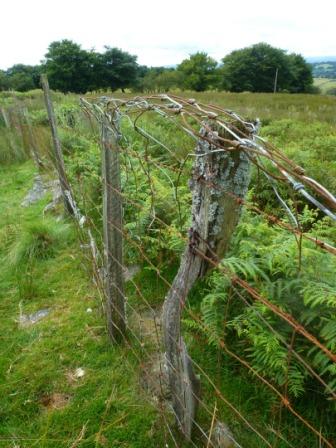
It felt strange today to walk along a boundary between the commons and farmland. On one side, the commons after the gathering were bare of sheep and on the other fields promising a hay crop (should the mid July weather get better). This boundary is interesting because the remains of the old stone wall still exists, yet the steel fence runs most of its length, with just a few feet of difference between the old and new.
 The age old, carefully built stone walls, built by those (probably long dead) are crumbling into dis-repair, but the steel fence a mere two feet away is also beginning to look elderly.
Rickety old fence posts, like loose teeth in a long jaw-line no longer even hold the most  recent fence in place. Many are lichened and show all the signs of deterioration, some are more, stand alone, unattached  to the fence and most definitely loose and rather wobbly but replaced by some cut down posts that are more sturdy and long lasting, good "old fashioned" telegraph poles. In this age of internet technology, the telegraph is now long dead. Some of the older fence is rusting, adding another colour to the dividing line that separates the at times, bleak seeming moorland from the rich landscape of lush pasture.
 We talk about recycling today as if it were a new concept, it's been going on for many generations before us. Some just didn't take care to refine their acquisitions of discarded telegraph poles and simply cut them down to fence post size and incorporated them into boundary fencing attaching the steel wire fence to these bastions of long lasting wood.
Along this boundary fence, there are examples of the tall and the short, the straight and the bendy, many of them covered with all sorts of lichens, they all continue to intrigue me.
As we ambled along the fence-line, an odd feeling today because the moorland after the gather was devoid of curious sheep and yet the air was alive with the sound of birds.
 Perching and singing, or preaching and warning it was hard to tell, but the air was alive with birdsong, a big contrast to the silent sentinels of "border control" ... the fence posts.
Meanwhile ... across the dividing line, several sheep were eating the (as yet) unmown hay .
One minute they were visible, the next hidden amongst the long growth, there still remained the boundary that existed between us, one of an old dilapidated, crumbling stone wall and a mixture of rusted wire and still shiny, more modern steel fencing. It was strange amble, caught between the old, almost forgotten stone building, the present use of steel and whatever modern expertise  exists in the future. One can only wonder what the future will hold? What new, unprecedented technology lies ahead of us?